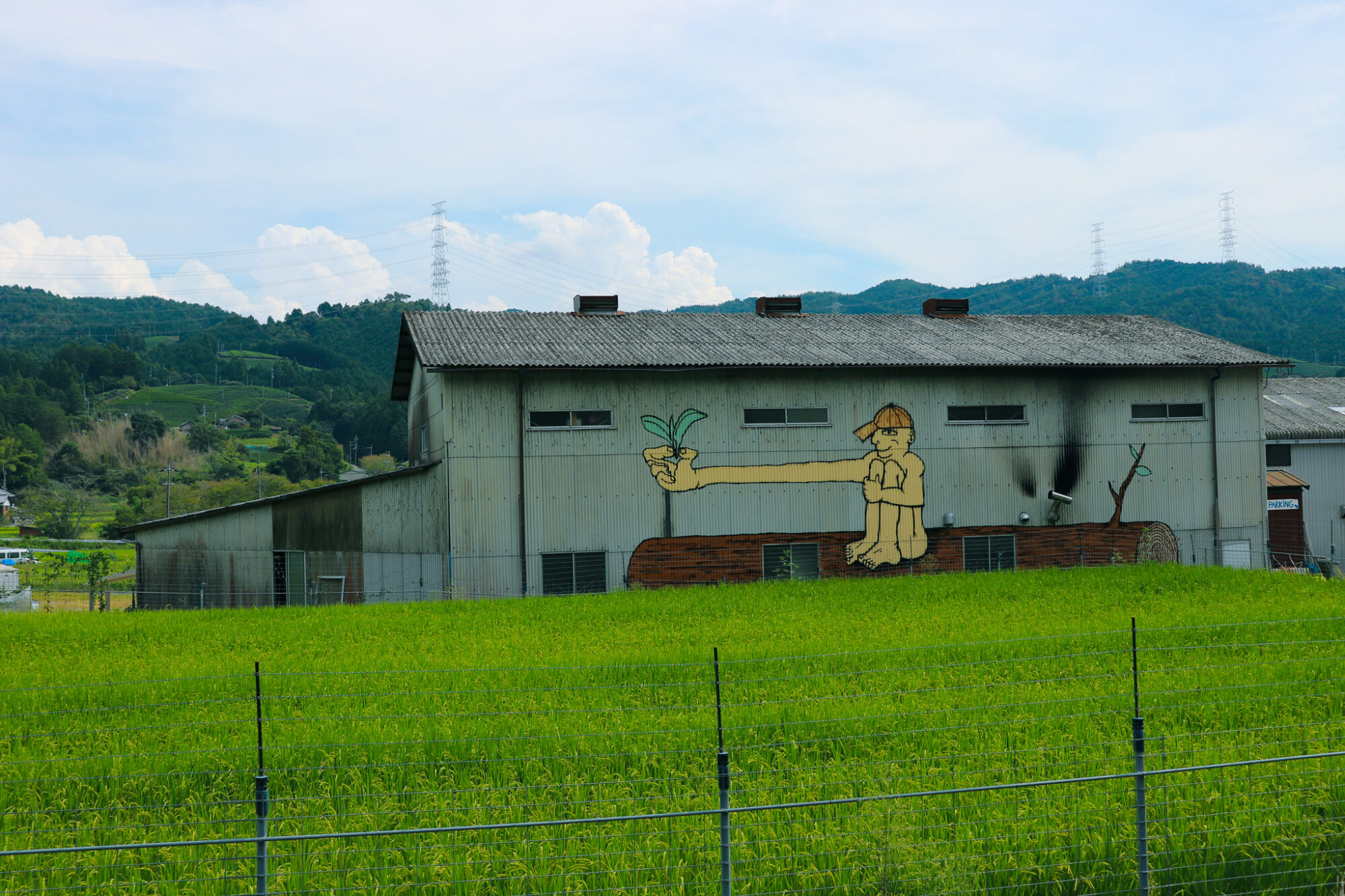
Over the last few months, I’ve shared many of the tea places I visited during my trip to Japan last September. I had to save one of the best for last. Obubu Tea Farms has been on my bucket list for years. It was a dream come true to finally visit them in Wazuka. In this post, I’ll share all about my visit. It is important to note that my experiences may differ from the standard tour, as I visited as part of the Japanese Tea Masters course run by the Global Japanese Tea Association.
About Obubu Tea Farms
Obubu Tea Farms was founded in 2004 by Akihiro Kita and Yasuharu Matsumoto. They aim to educate tea lovers both in Japan and abroad about the significance of tea farming and to contribute to society through tea. They are a working tea farm and online retailer that offers interactive tours. They are well known for their internship program, which gives passionate individuals the opportunity to live and work on the tea farm.
Address: 2 Otsuka Sono, Wazuka-cho, Soraku-gun, Kyoto, 619-1201
Hours: 10:00 AM – 3:30 PM
Monday through Friday
Website: https://obubutea.com/
Specialty: Guided tea farm tours with available shuttle bus service
When we first arrived at Obubu Tea Farms, our bus drove to a certain point, but from there we had to hike the rest of the way up a very steep hill. It felt a bit like climbing to the nose-bleed seats in a stadium over rocks instead of stairs. At the top, we found the Jinja field, which was named because of the shrine that sits at the beginning of it. I had sensory overload in the best way. The views. The insects continuously buzzing in the background. The organic, loamy smell of the earth.
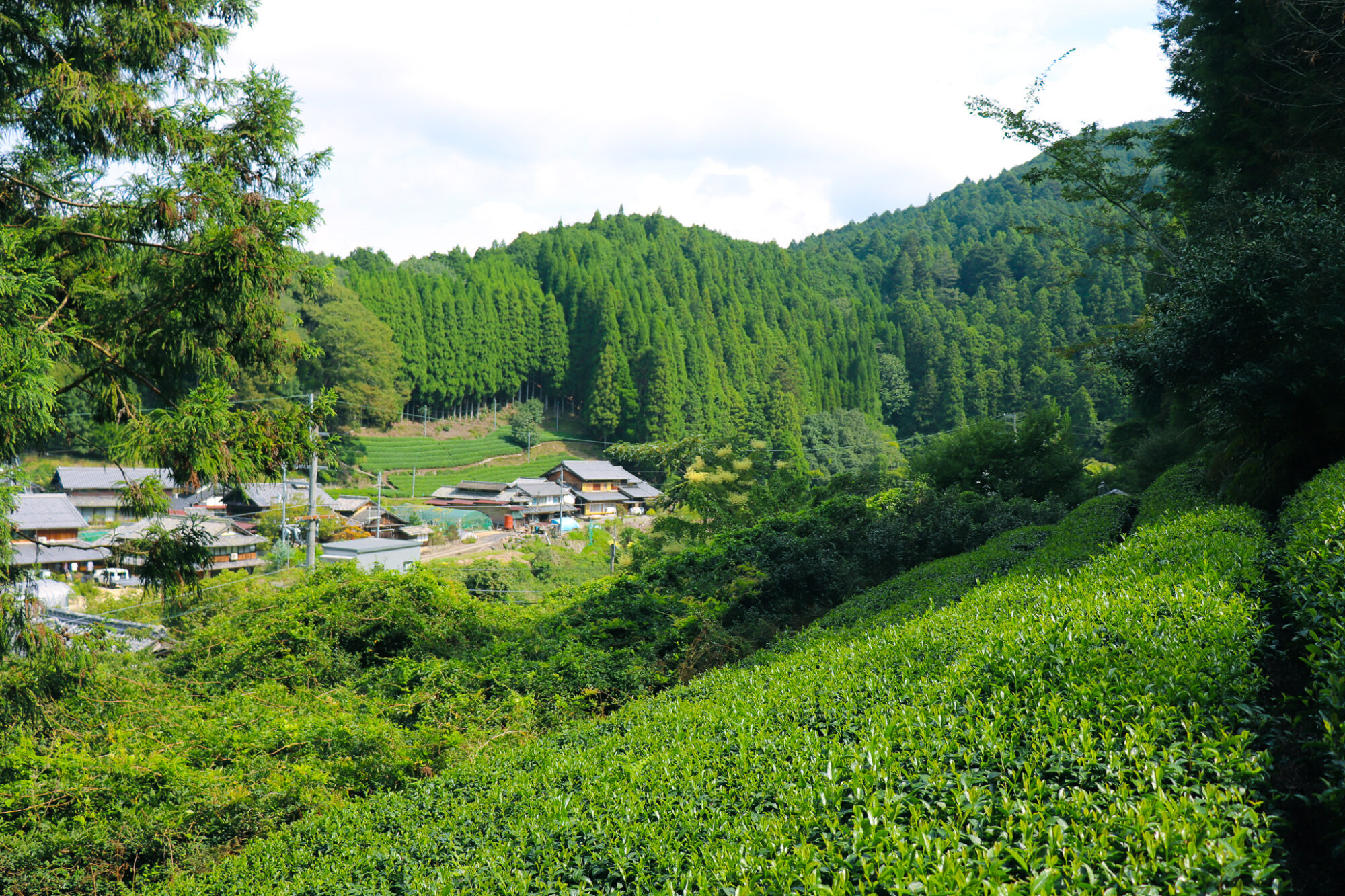
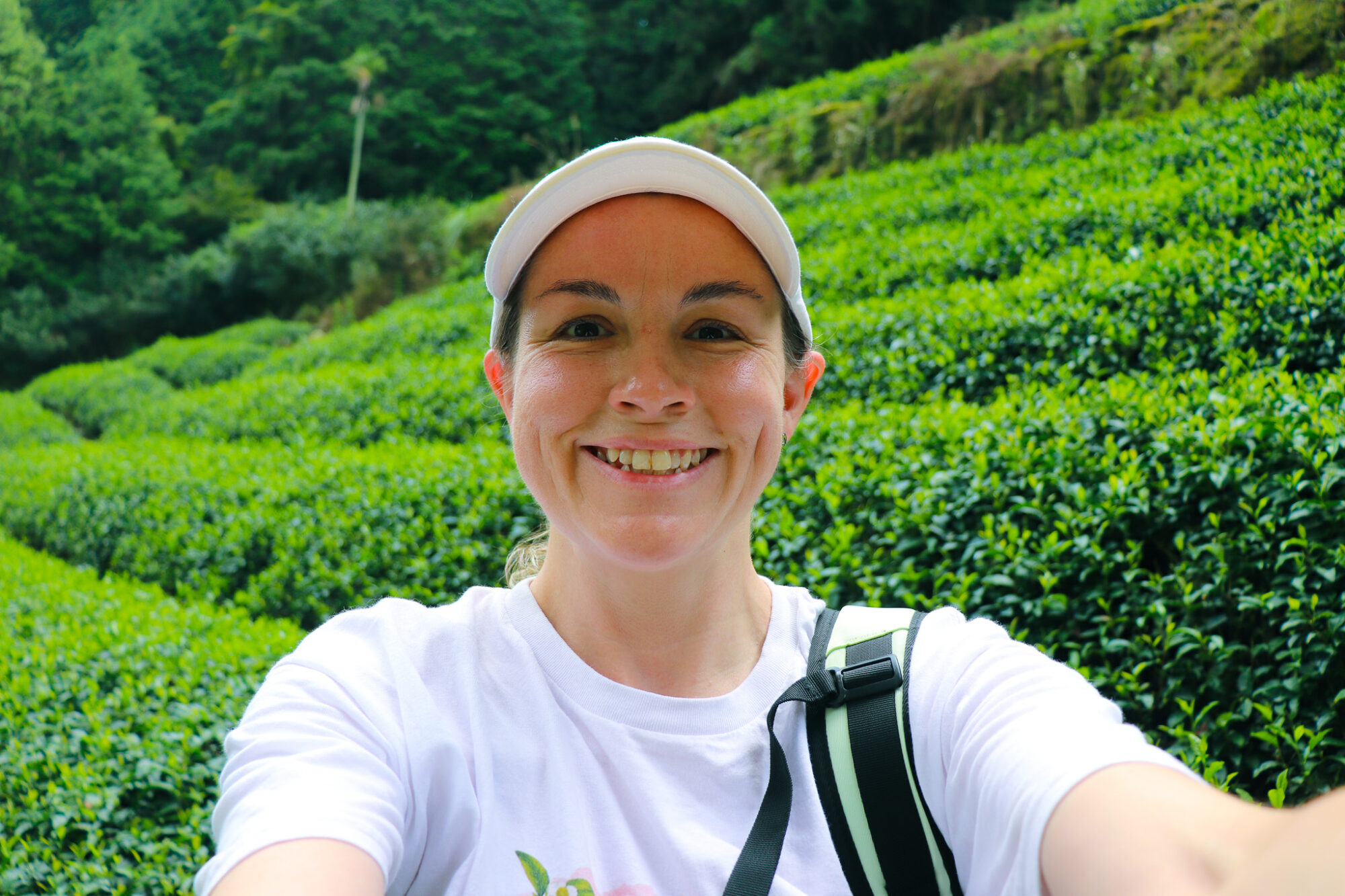
The field was very steeply sloped. We were advised to tuck our pants into our socks since snakes, leeches, and other critters could be hiding among the bushes. I was glad that I had brought hiking shoes. Although it was technically fall, the weather in Kyoto had been incredibly hot and humid. This day was no exception. My camera lens kept fogging up before it adjusted. Despite the weather I was in my glory. When I sent the tea field selfie below to my mom she said I looked like a kid in a candy store.
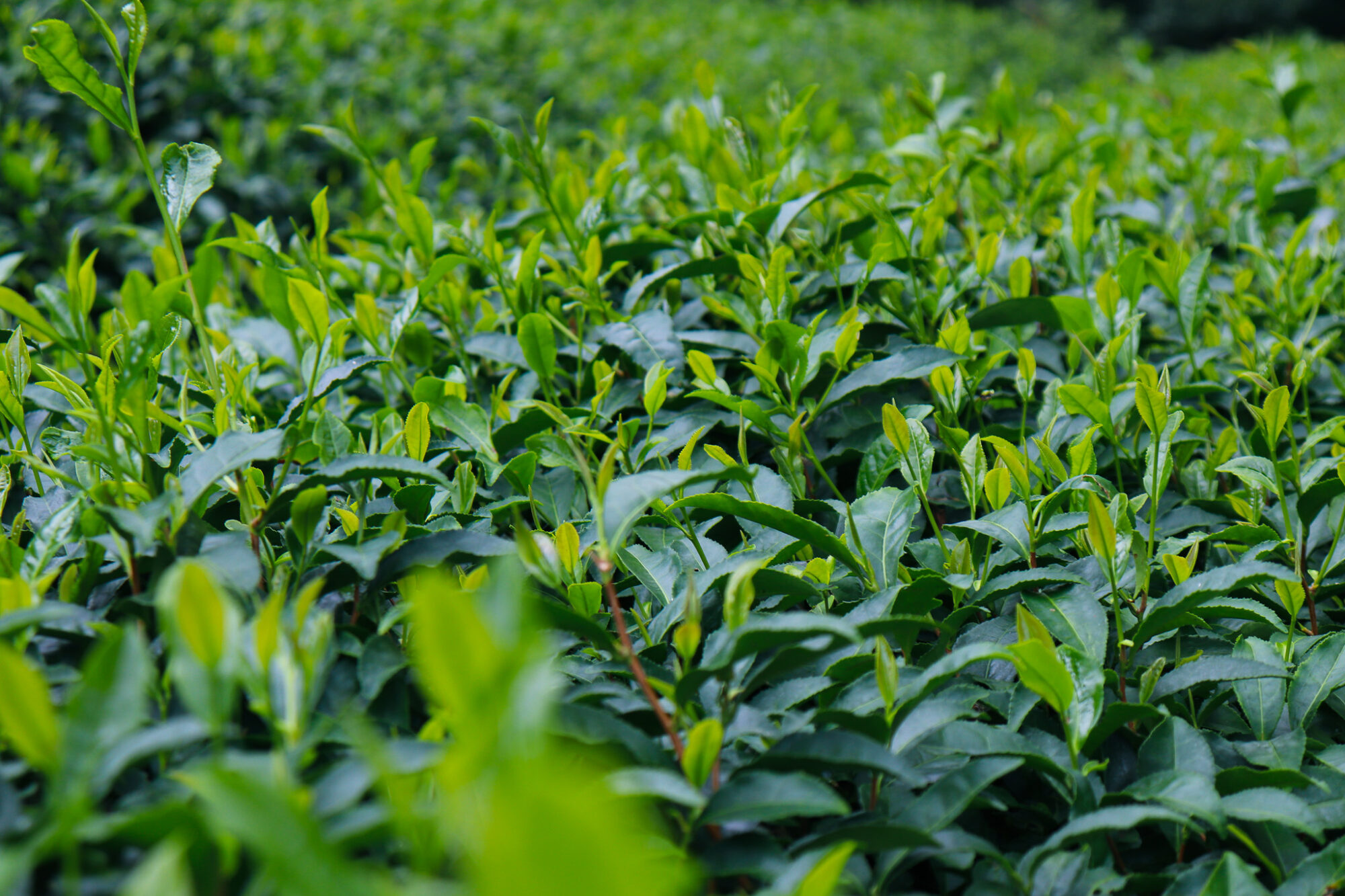
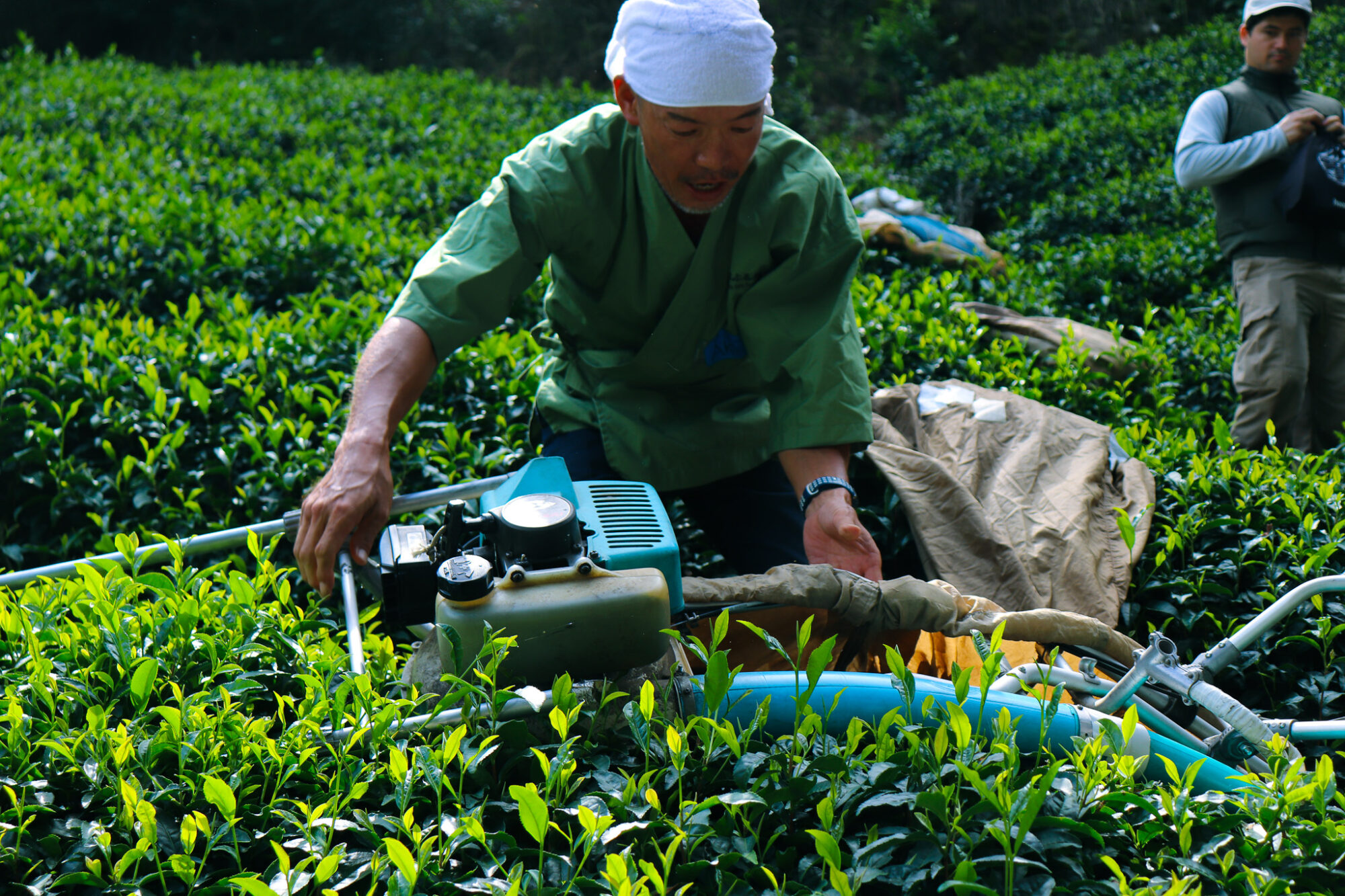
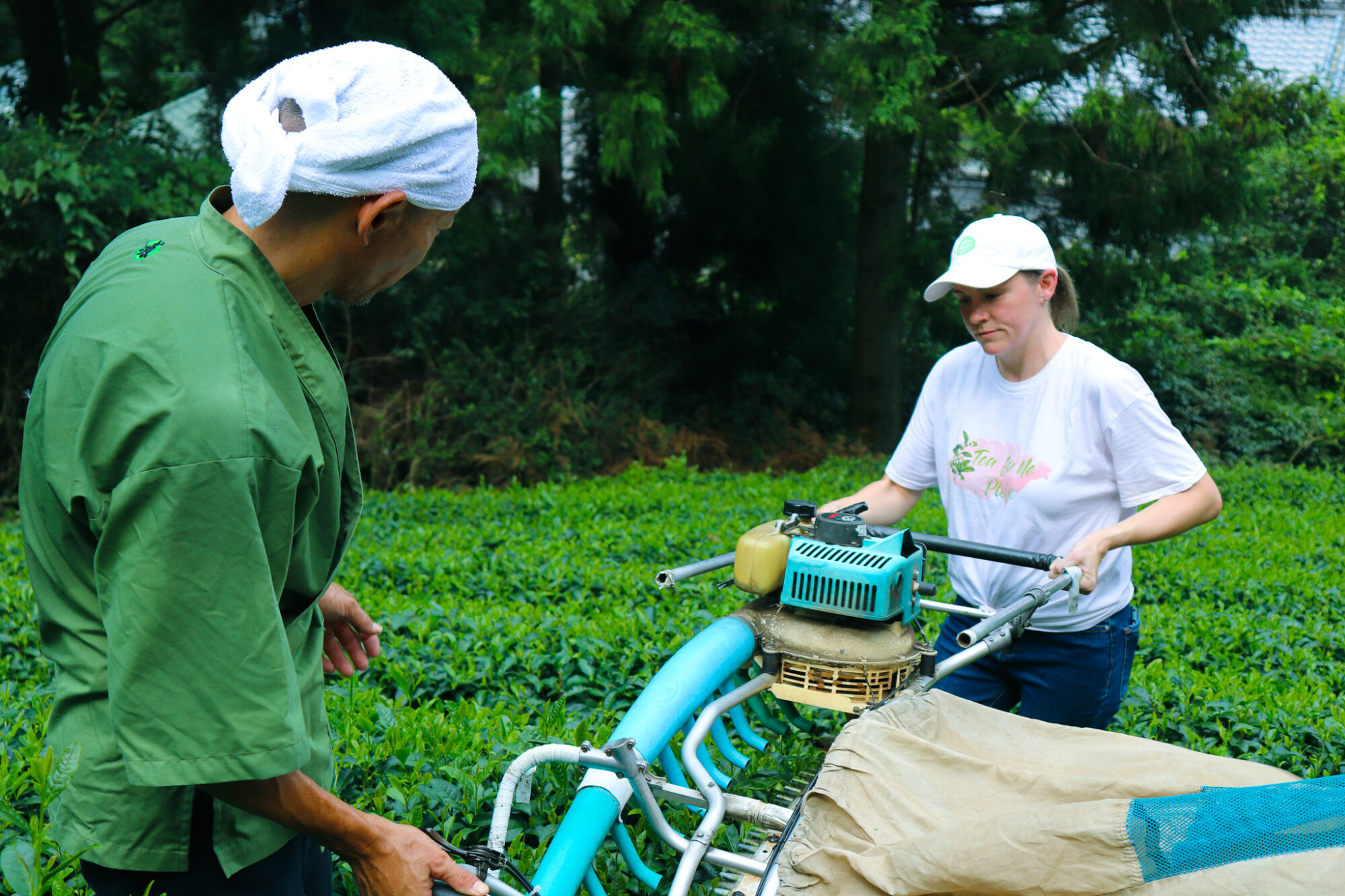
The tender, lighter green tips you see sticking out from the tops of the bushes are the famous ‘two leaves and a bud’ that is often synonymous with fine tea. Japanese tea is a bit unique because it almost all harvested by machine. Farms that are flatter land use ride-on machines, but the fields at Obubu are too steep to allow for that. A modified hedge clipper with a bag to catch the trimmed leaves is used instead.
Akky did a demonstration of how it is used and then my classmates and I were each given the opportunity to give it a try. I can confirm that is heavier than he makes it look. It was a challenge to keep the cutting mechanism at just the right angle while crossing steep rows with uneven footing. It definitely gave me even more respect for every cup of tea than I had before.
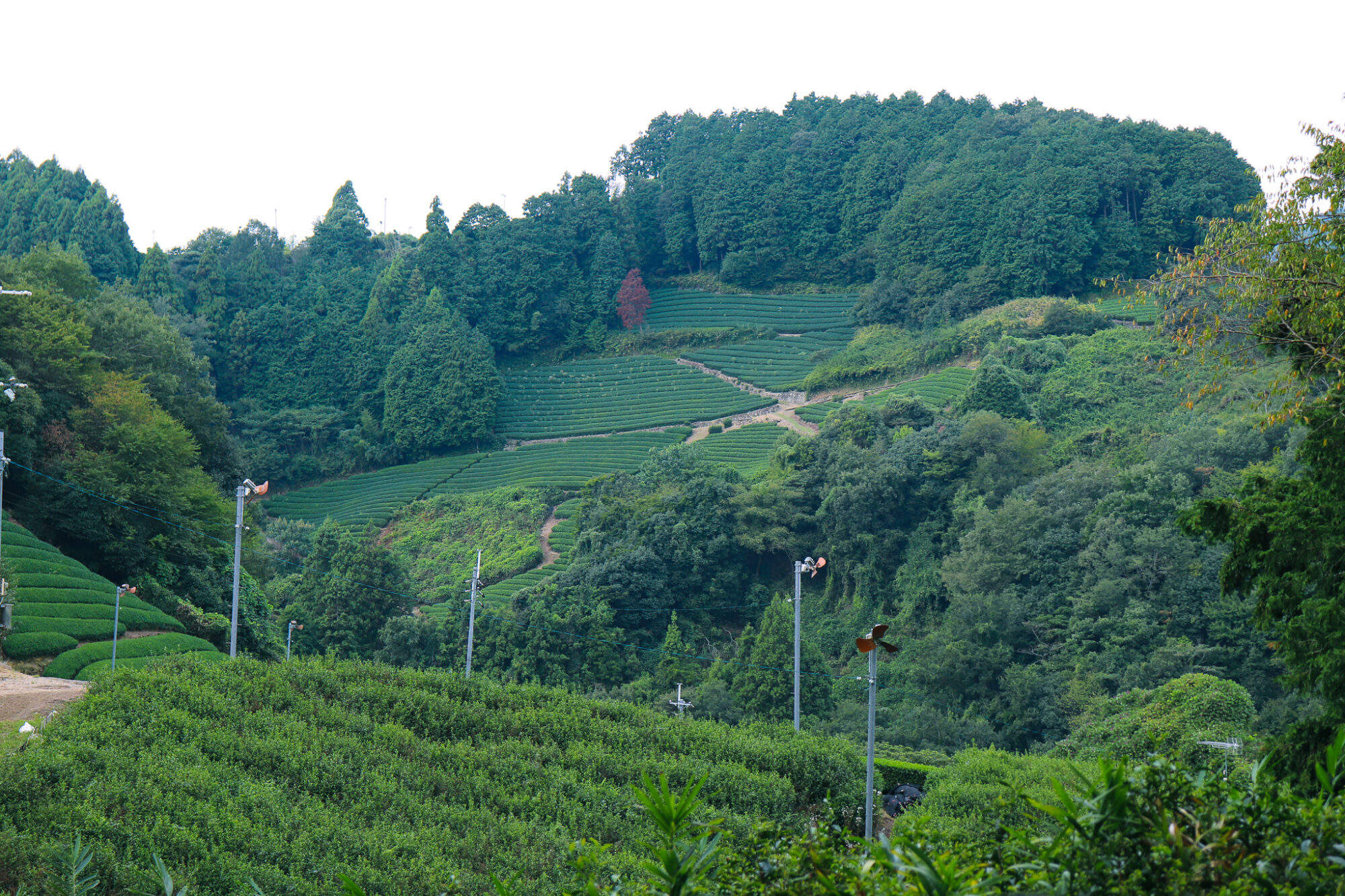
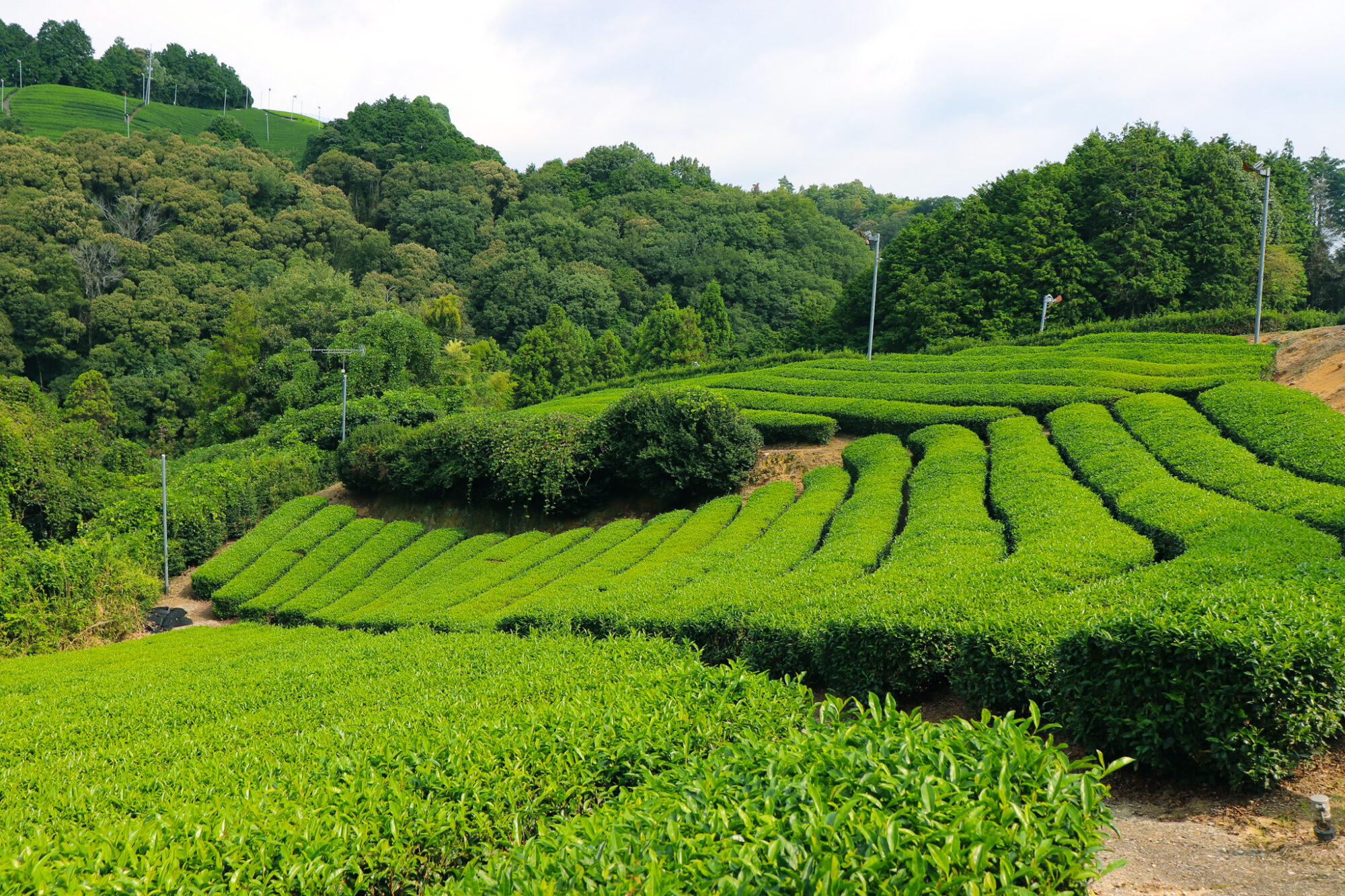
I really could not get enough of the views. Green was already my favorite color, but I’ll forever associate it with visiting these beautiful fields. My camera roll was full of so many pictures of fields and leaves. There were way too many to share in this post, but I’ll include a few of my favorite landscape shots below.
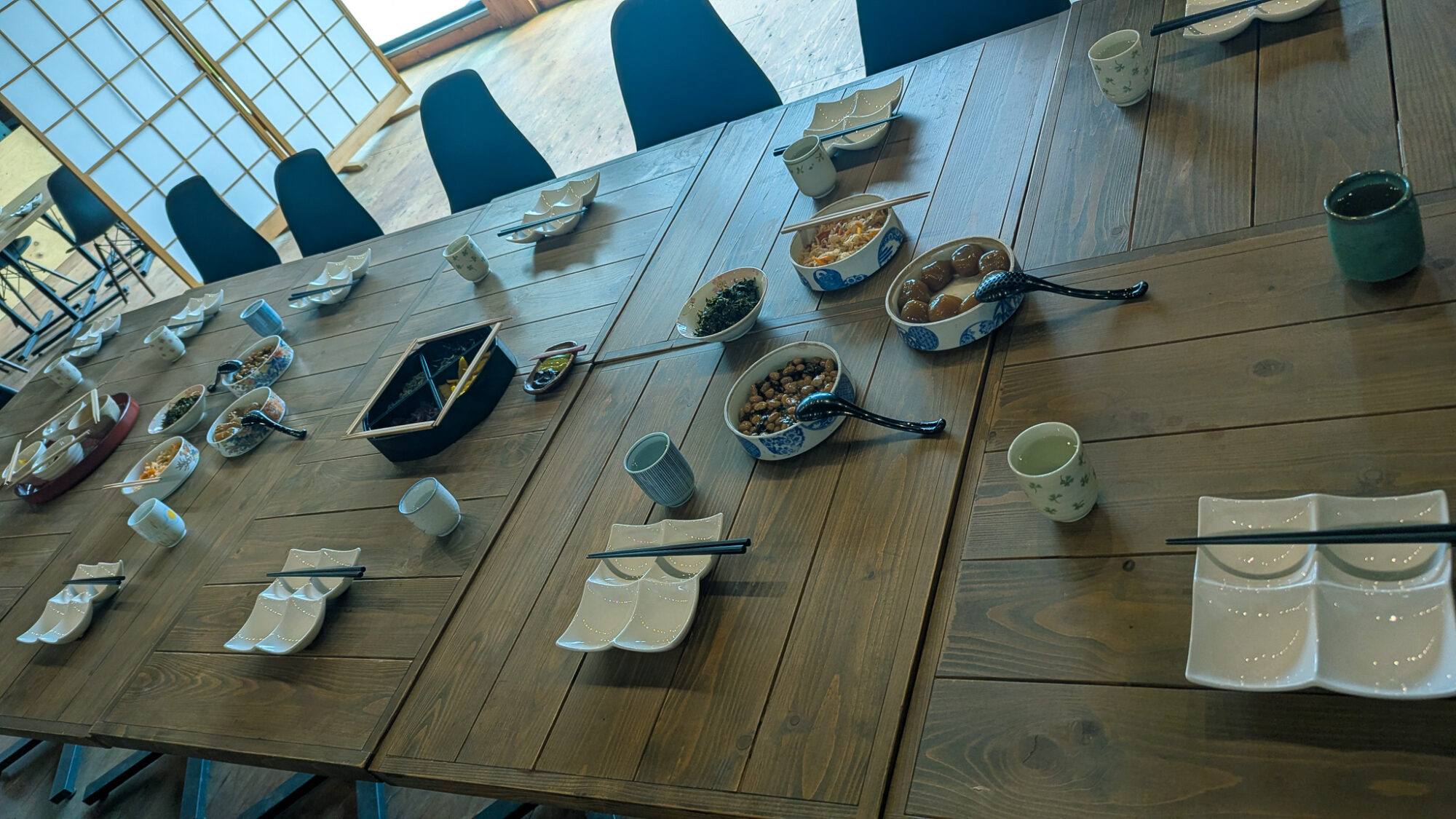
After frolicking in the tea fields, we were treated to a traditional tea lunch in the loft space above the tea factory. By this time, we were all starving. The air conditioning also offered a welcome respite from the heat. We were served Bubuzuke, which is Obubu Tea Farms’ twist on traditional ochazuke. We all had bowls of white rice with a variety of toppings like pickles and seaweed to choose from. My favorite was the tsukudani tea salad. Brewed tea was then poured over to make a broth. The iced mochi was also a very nice treat.
Next, we stopped into their small gift shop. I had been pretty restrained with my purchases during most of my time in Japan, but the excitement of the day got the better of me. I purchased a tote bag, a t-shirt, a samue, two different kinds of wakocha, and a kukicha. In my defense, some of the tea was to share with members of my Patreon when I got home.
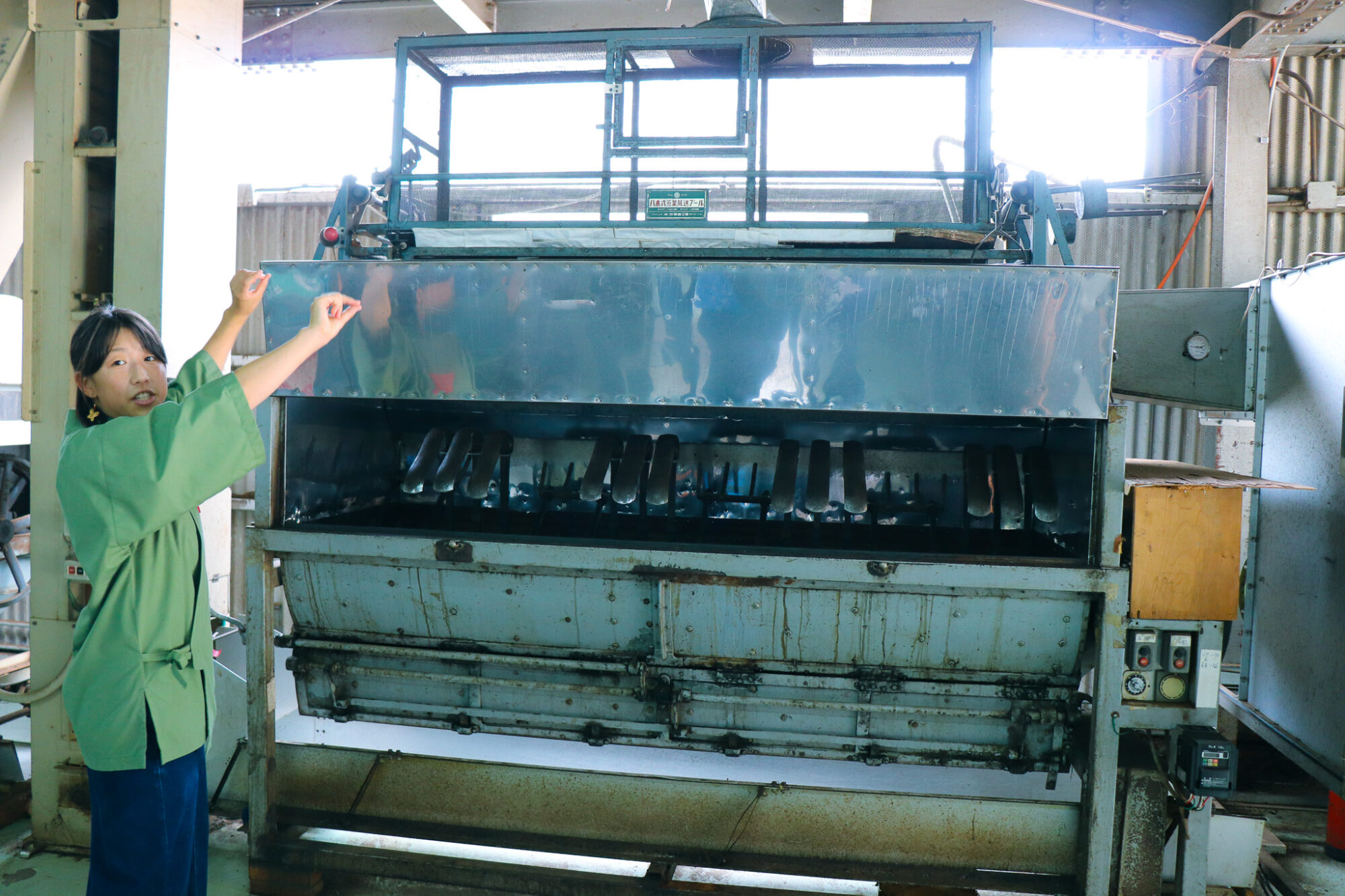
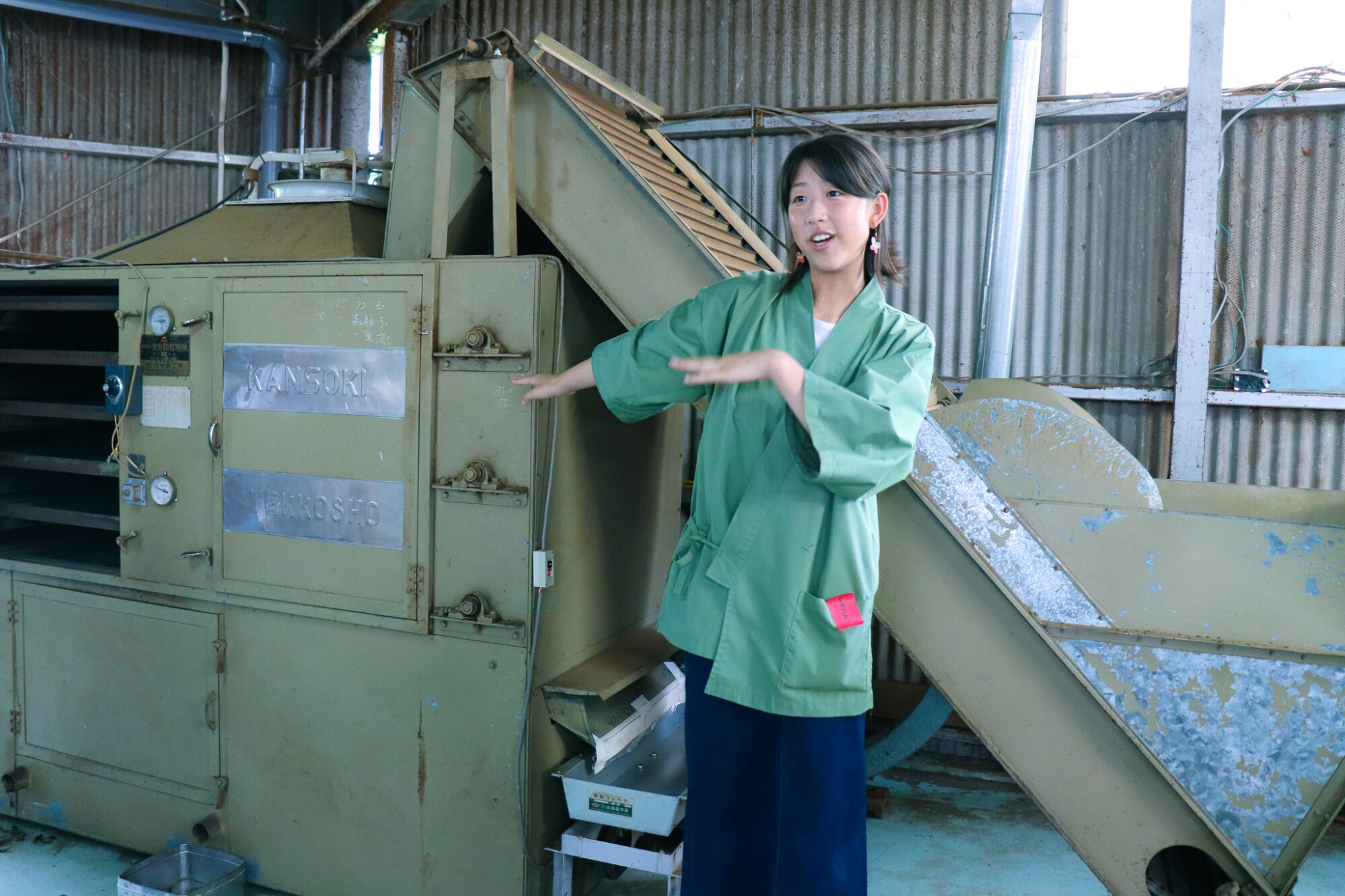
Then we went on a short tour of their sencha processing factory once we were done frolicking in the fields. Seeing the machines in person helped clarify everything I had learned about tea processing over the years. Mia, one of the assistant managers, did an excellent job explaining each step of the process. Although they weren’t making tea at the time, she turned on each of the machines so we could see them in action.
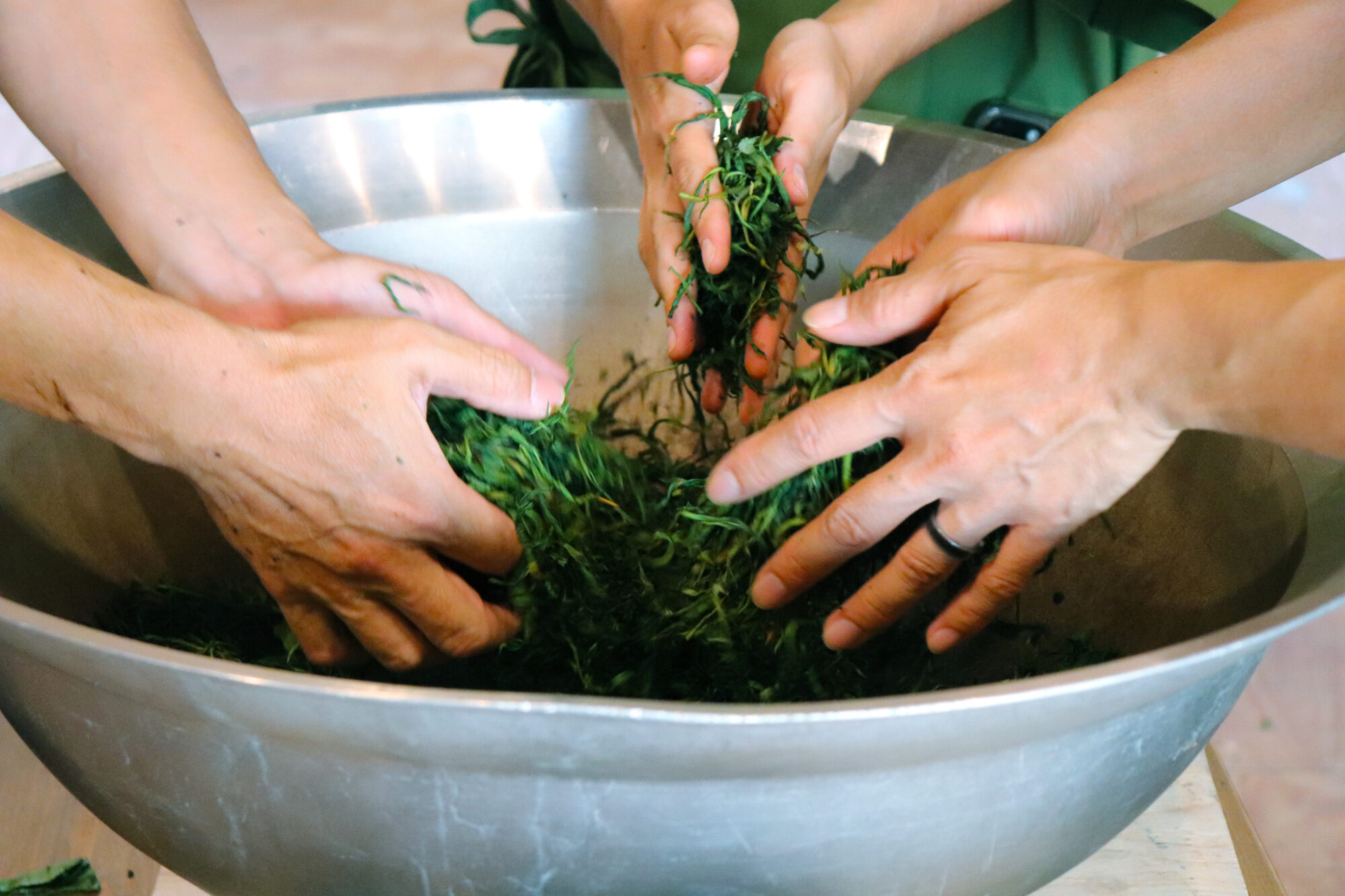
Now it was time to process the leaves that we had harvested. Our class was divided into three teams. My group made kamairicha, but others made black tea or oolong. The leaves were pan-roasted to stop oxidation. This part was very hot, even with protective gloves. They were then rolled by hand on a bamboo mat. The leaves quickly became super sticky and smelled amazing.
We had to do five rounds of alternating between drying the leaves in the pan and rolling by hand to shape them before it was finished. The entire process took hours, so I can see why it wouldn’t be possible to offer this activity for most tours. I feel very lucky to be able to experience making tea by hand.
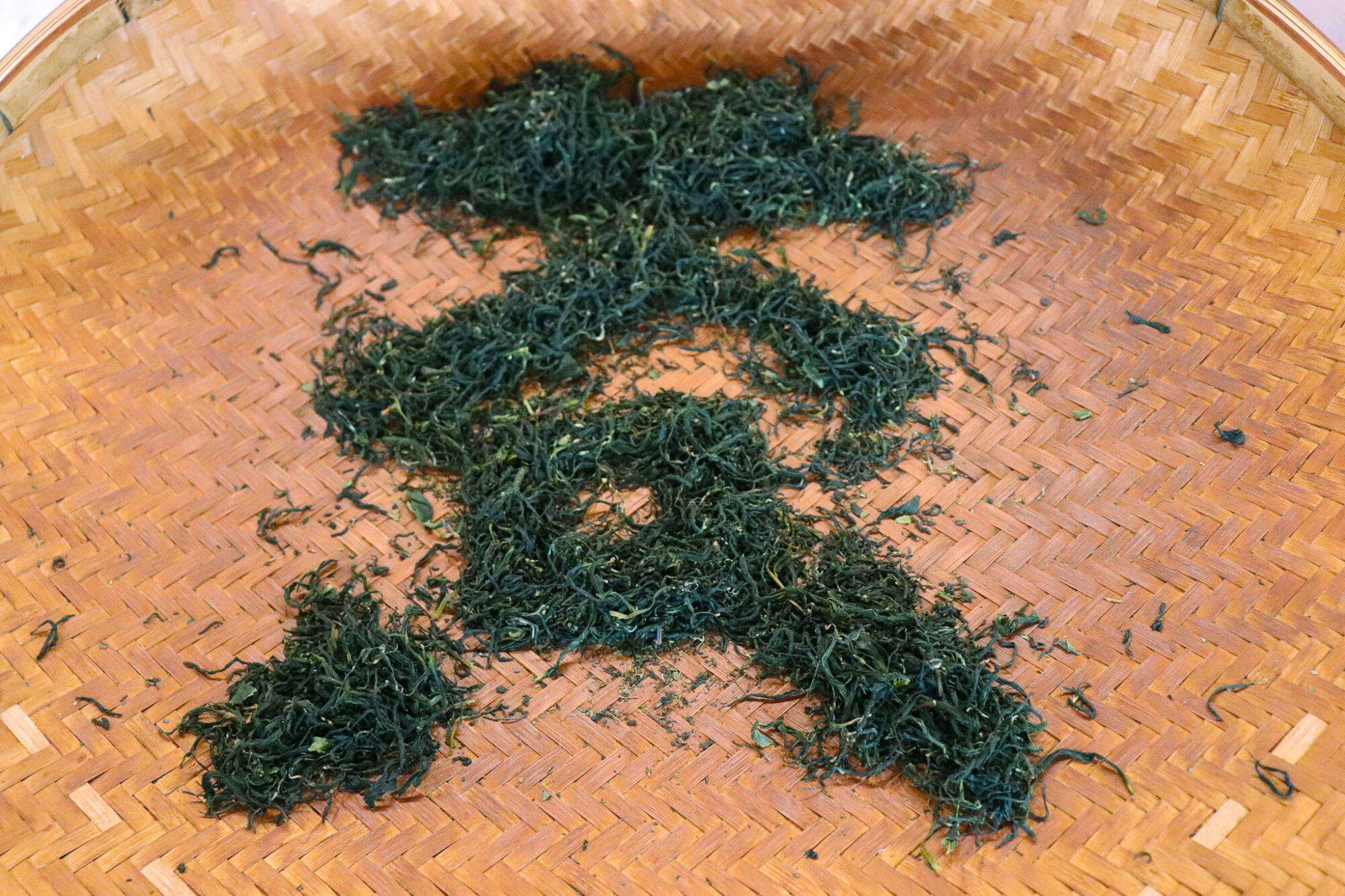
I’m pleased to report that the kamairicha we made turned out surprisingly tasty. It even won the popular vote when we tasted all of the teams’ teas together. I’m sure that was thanks to the expert guidance we received from Hiro, Matsu, and others. The Obubu Tea Farms intern who assisted us shaped the leaves into the character for tea. It was too cute not to snap a picture!
I tried the tea we made again recently. Each sip brings back wonderful memories of my visit to Obubu Tea Farms. I purchased a copper caddy as a special souvenir for this trip, and I chose to store the kamairicha in it. It will be interesting to see how the flavor changes over time.
Everyone we met at Obubu Tea Farms, from the farmers to the interns, was incredibly warm, friendly, and passionate about tea. Their love for what they do comes through in everything that they do. I highly recommend taking a tour if you ever have the chance. I certainly hope to return myself in the future.
Have you ever visited Obubu Tea Farms? What was your favorite part? Let me know in the comments below!
Help Support This Site

Please support my work in tea by joining my Patreon community. Give what you can and receive access to exclusive behind-the-scenes content, my private Discord server, surprise quarterly packages, and more!